
Fix the root cause, not the symptom.
How pulley misalignment led to discovery of a motor base crack
Case Study
The Challenge
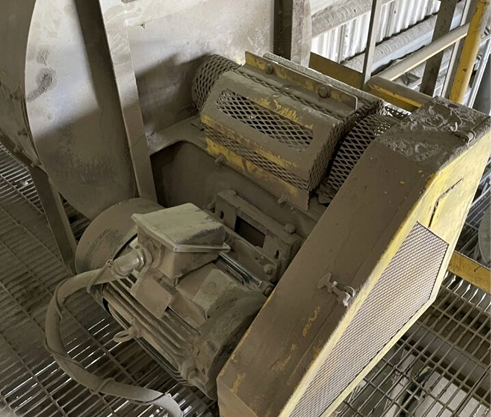
The Situation
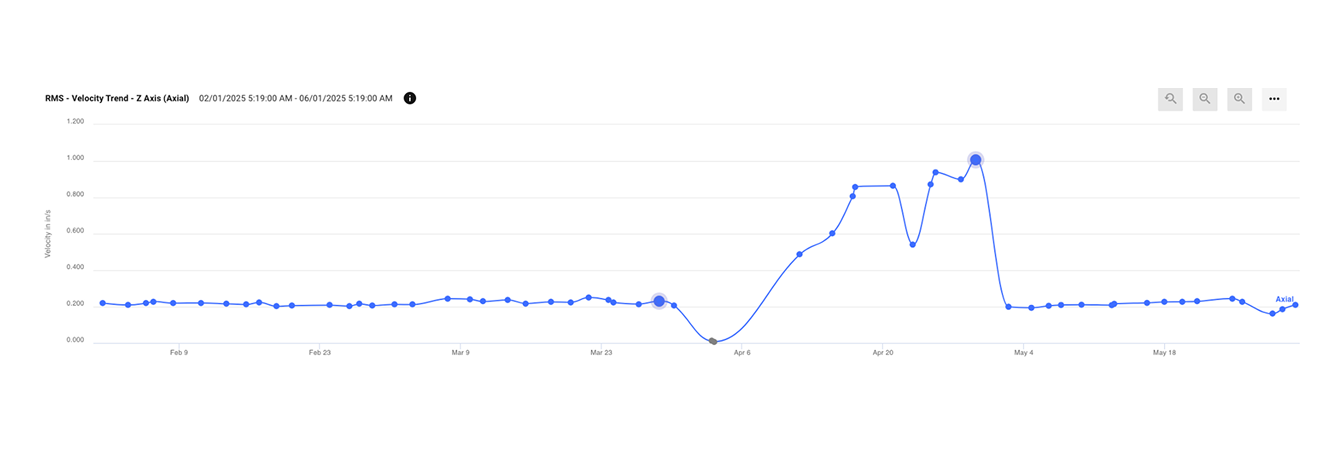
Skyler’s monitoring system detected concerning vibration trends on an industrial belt-driven fan. Velocity vibration level steadily increased from 0.2 IPS to over 1 IPS within one month-a pattern consistent with pulley misalignment.
What made this case unusual was the timing. Typically, misalignment appears immediately after maintenance when pulleys aren’t properly realigned. However, this misalignment developed gradually over time, suggesting a deeper issue at play. This atypical progression prompted Skyler’s team to investigate beyond the obvious diagnosis.
What We Detected
Vibration Evidence
- Velocity RMS Trends: Continuously
increasing from 0.2 IPS to over 1 IPS
in just one month - Component: Motor Drive End (DE)
- Motor Speed: 1,800 RPM
Diagnostic Pattern
- Elevated fan shaft speed peak amplitude on motor sensors – higher than the actual motor shaft speed peak.
- Progressive increase in fan shaft speed peak amplitude over time
Potential Consequences
- Accelerated motor and fan bearing degradation
- Premature belt and sheave wear
- Shaft bending stress
- Reduced fan output due to decreased torque capacity and higher belt slip
Velocity Trend Analysis
Component:
Motor DE
Speed:
1800 RPM
Pattern:
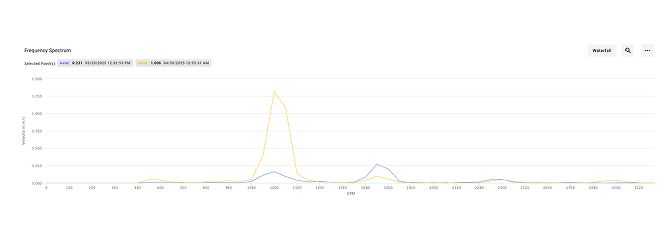
Spectrum Analysis
Component:
Motor DE
Speed:
1800 RPM
Pattern:
Our Recommendations
- 1Immediate Check:
Inspect pulley alignment, belt Examine motor base for condition, and sheave wear.
- 2Deeper Investigation:
Examine motor base for condition, and sheave wear. structural looseness, hardware, or cracks.
*The second recommendation proved to be critical.
On-Site Findings
Multiple alignment attempts failed:
Despite repeated efforts, pulleys could not be aligned to acceptable tolerances.
The critical clue:
Each time belts were properly tensioned, the misalignment immediately reappeared
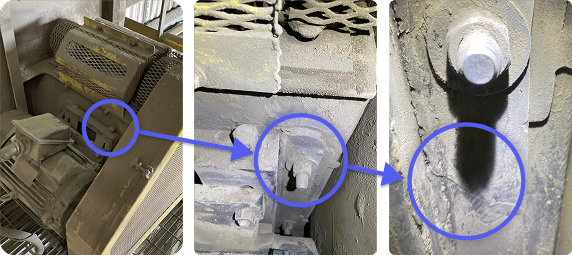
Root cause identified:
Thorough inspection revealed a hairline crack underneath the motor base –
difficult to spot but causing the recurring alignment issues
The Result?
$20,500 in total savings.
Action Taken:
- Motor base plate replaced
- Pulleys successfully aligned after base replacement
Root Cause Confirmed:
Value Delivered:
- Catastrophic failure avoided: Prevented potential motor failure and unplanned downtime
- Cost savings: Minimum $18,000 in avoided unplanned downtime
- Equipment savings: $2,500 in motor replacement costs avoided
- Operational continuity: Issue resolved during planned maintenance window
Talk to an Expert
Discover what’s possible for your business, talk to one of our experts